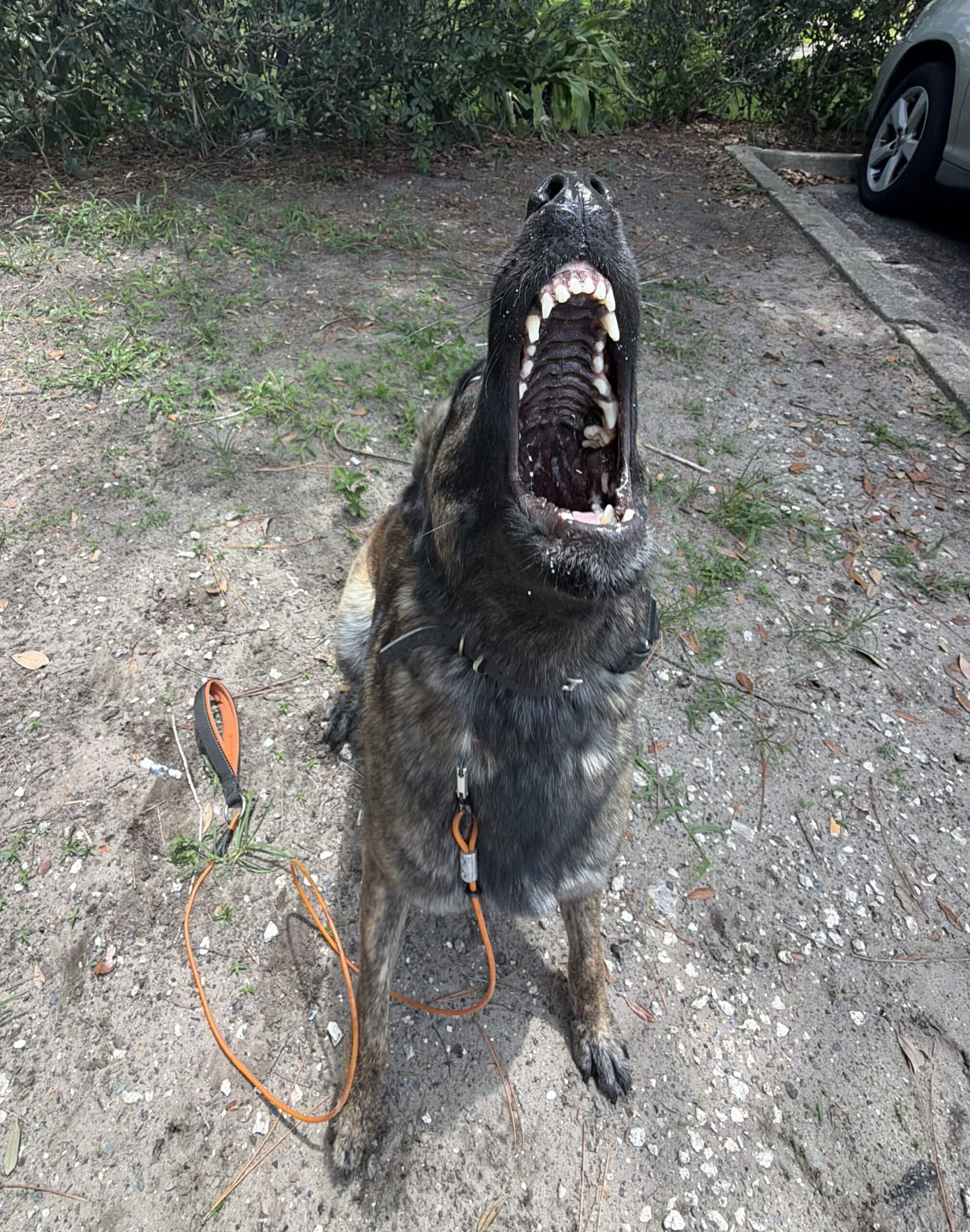
Dog aggression and nipping training in Miami often starts with a simple realization: when your dog growls, snaps, or nips, it can leave you wondering what went wrong. Maybe your dog becomes tense around visitors. Maybe they bark at dogs during walks. Perhaps your puppy gets mouthy whenever they become excited. These behaviors can be frustrating. They can also be your dog’s way of communicating. Before you can change a behavior, you need to understand what is behind it, and that understanding is the foundation of effective dog aggression training in Miami.
Why Dogs Become Reactive
Dogs react for many different reasons.
Fear can cause growling or snapping. Excitement can lead to jumping and nipping. Frustration may show up as barking or lunging.
Some dogs become protective of their home. Others struggle because they have never learned how to handle certain situations.
A dog’s past experiences can also affect their reactions.
Start by paying attention to what happens before the behavior. The trigger can provide important clues about what your dog is feeling.
Puppy Nipping Should Not Become a Habit
Puppies explore with their mouths.
Unfortunately, that can include your hands, clothes, and ankles.
Some nipping is normal during puppyhood. That does not mean you should ignore it.
Puppies learn through repetition. If nipping gets attention, they may continue doing it. If jumping gets them interaction, they learn that jumping works too.
Teaching appropriate boundaries early can help your puppy develop better habits as they grow.
Puppy training can give young dogs the structure and guidance they need during this important stage.
Aggression Is More Complicated Than a Label
It is easy to describe a dog as aggressive.
The label does not explain the behavior.
A dog may growl because they feel threatened. They may guard food because they worry about losing it. They may lunge at another dog because they are overwhelmed or frustrated.
The reaction is only part of the story.
Understanding what causes the reaction gives you a better starting point for training.
Behavioral training can help families identify behavior patterns and teach dogs more appropriate responses.
Miami Can Be an Exciting Place for Dogs
Your dog experiences the world far beyond your living room.
Neighborhood walks bring people, dogs, bicycles, cars, and unfamiliar sounds. Parks provide new smells and distractions. Busy public spaces create even more opportunities for excitement.
That can be challenging for some dogs.
A dog who listens perfectly at home may struggle when surrounded by distractions.
This does not mean your dog cannot learn.
It means they need to practice their skills in the environments where those skills matter.
Leash Reactivity Can Take the Fun Out of Walks
Does your dog bark or lunge when another dog appears?
Leash reactivity is a common concern for dog owners.
Some dogs react because they feel nervous. Others become frustrated or overly excited when they cannot control the distance between themselves and another dog.
Whatever the cause, the behavior can make walks stressful.
Leash training can teach your dog to stay connected with you and respond to guidance when distractions appear.
The goal is not simply to silence the barking.
Your dog needs to learn a better way to respond.
Clear Expectations Help Dogs Succeed
Dogs learn through patterns.
They learn which behaviors get attention. They learn what earns rewards. They learn what happens after certain choices.
Clear expectations make those patterns easier to understand.
If jumping is sometimes allowed, your dog may not understand when it is appropriate. If family members use different rules, your dog receives mixed information.
Consistency makes training easier.
It also helps your dog feel more secure about what you expect.
A Growl Is Information
A growl can be unsettling.
It can also be a warning.
Your dog may be telling you that they feel uncomfortable before they escalate to snapping or biting.
Punishing the growl does not necessarily address the underlying problem. It may simply remove an important warning sign.
Instead, take the behavior seriously.
Create distance when necessary. Identify the trigger. Work on the issue gradually and safely.
If your dog has bitten someone or presents a serious safety concern, seek professional guidance.
Real-Life Training Creates Real-Life Skills
Your dog does not live in a quiet training room.
They live in your home. They walk through your neighborhood. They meet guests. They encounter other dogs, people, and distractions.
That is why Sit Happens Dog Training Miami focuses on practical training that fits everyday life.
Our behavioral training helps families address concerns such as aggression, reactivity, anxiety, barking, jumping, and other challenging behaviors.
We also offer obedience training and leash training to help dogs develop stronger communication and more reliable skills.
Every dog has a different personality.
Every household has different goals.
Training should account for both.
When Should You Get Professional Help?
You do not need to wait for a behavior to become severe.
Professional guidance can help when your dog’s behavior starts interfering with daily life. It can also help you address smaller concerns before they become established habits.
Consider professional training if your dog regularly growls, snaps, nips, lunges, guards resources, or reacts strongly to people or other animals.
If your dog has bitten someone or presents an immediate safety risk, prioritize safety and seek qualified professional help.
Early intervention can give you more options.
Help Your Dog Build Better Habits
Aggressive or reactive behavior can make you feel like you are constantly managing the next problem.
It does not mean your dog is hopeless.
It means something needs to change.
Clear communication can help. So can consistent expectations, appropriate structure, and professional guidance.
Walks can become more manageable.
Guests can become less stressful.
You can learn to recognize your dog’s signals before a situation escalates.
Most importantly, you can build a better understanding between you and your dog.
If your dog is struggling with nipping, aggression, reactivity, or other challenging behaviors, contact Sit Happens Dog Training Miami at 305-564-6150 to schedule a consultation.
Follow Sit Happens Miami on Facebook and Instagram for practical dog training tips, behavior advice, and everyday training ideas.